The New Software Criteria: Why AI SaaS is Different
If it works great, out of the box, it might be terrible for you We’ve been here before. In 1910, Ford Motor Company’s Highland Park Plant opened as the most advanced manufacturing facility in human history. It was fully electric-powered at a time when water- and steam-power still
If it works great, out of the box, it might be terrible for you
We’ve been here before.
In 1910, Ford Motor Company’s Highland Park Plant opened as the most advanced manufacturing facility in human history. It was fully electric-powered at a time when water- and steam-power still dominated. Electricity allowed a dramatic increase in speed, power, and throughput. And, so, the plant … kind of bombed. Despite ambitious plans to produce a lot of cars very quickly and cheaply, the first Model T’s took more than 12 hours to build and cost $950, about $32,000 in today’s money, and wildly out of reach of most Americans.
It’s not just the tech, it’s how you use it
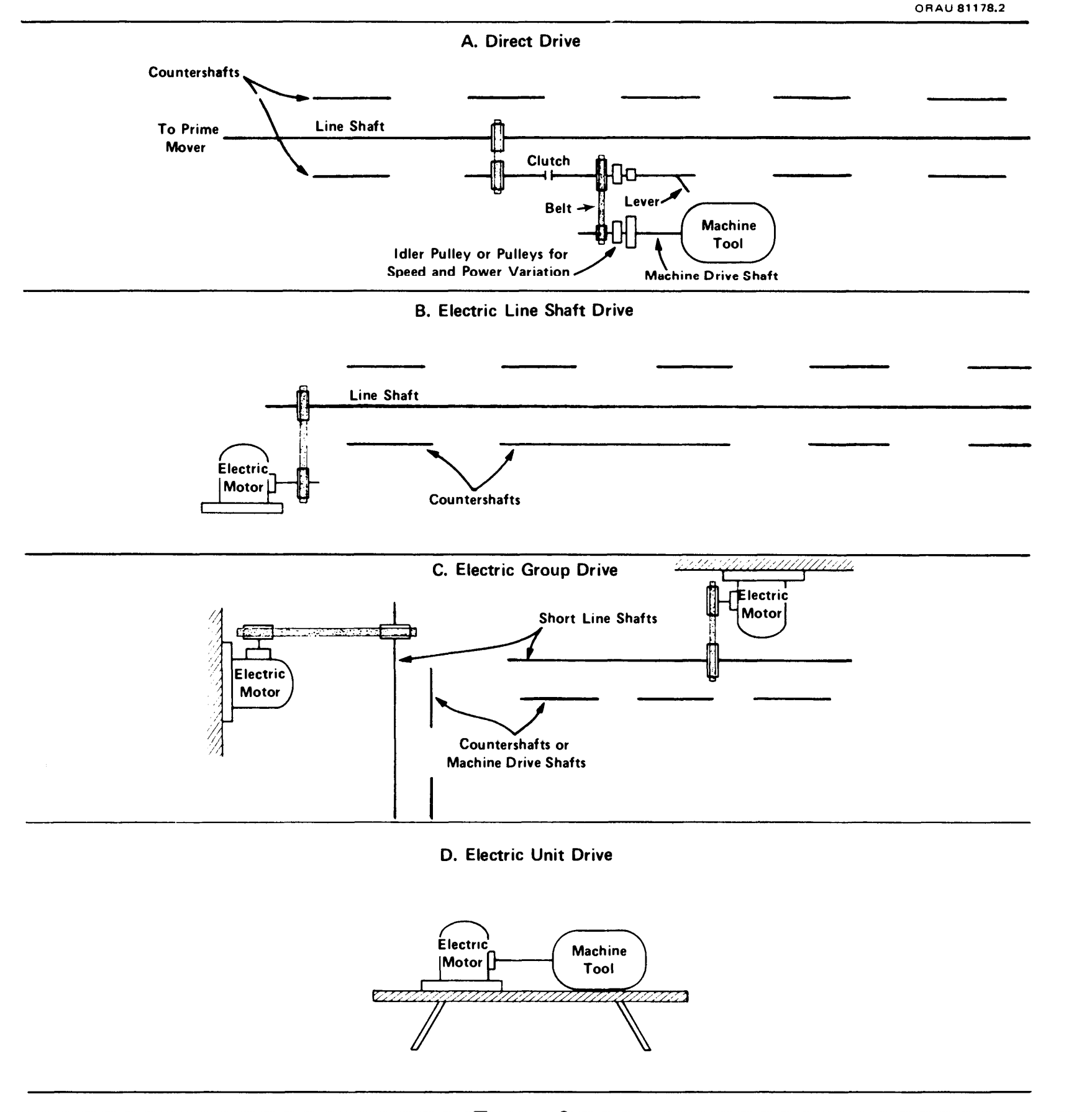
The problem turned out to be simple to identify and maddening to solve. Ford’s engineers had replaced steam power with electrical motors but had made no other changes to its manufacturing. With steam power, you had one giant motor—the bigger it was, the more power it could wield—that drove one giant shaft, turning powerfully in the center of the factory. A series of gears and smaller drive shafts were, in turn (literally), powered by the one main shaft.
Think of one of those gear games
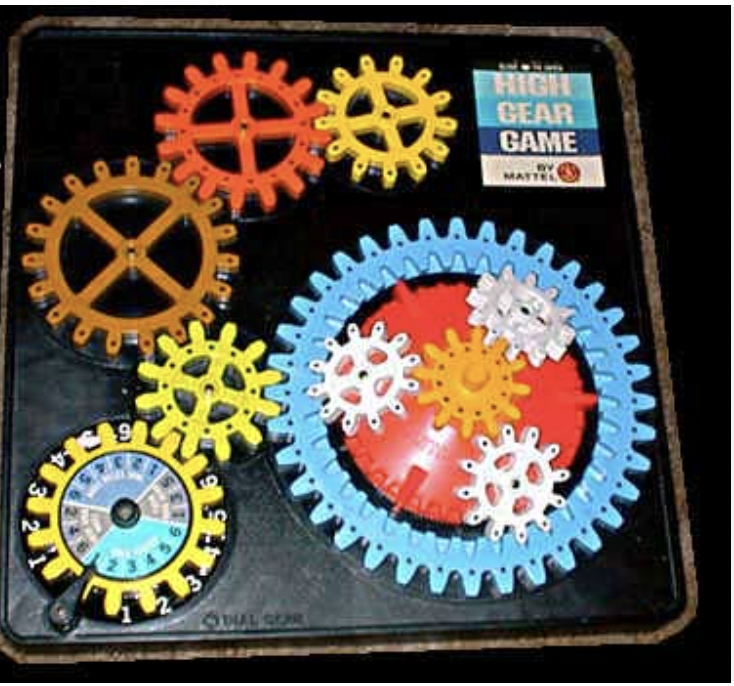
While this approach made sense for steam- and water-powered factories, it was inherently limiting. Much of the power was lost in all the friction and complexity of the multi-gear/multi-shaft system. And with all the moving pieces, things were constantly breaking down. Worse: problem in any one drive could cause stoppage everywhere.
The New Makes You Rethink Everything
When Highland Park opened, the brand new factory was set up, fundamentally, like a textile mill from 40 years earlier: one giant shaft (this one happened to be powered by electricity but was otherwise nearly identical to those powered by steam) ran a bewildering array of sub-shafts to power the equipment. The expected efficiency gains were absent because most of the problems with the old system were retained in the new.
It took a few years to see this clearly. By 1913, Ford engineers figured out something simple but essential: there is no reason to only have one giant electric motor. The limitations on steam and water are not present with electricity. Electricity allows for lots and lots of smaller motors, each of which can have exactly the power and speed settings appropriate for its task.
Soon, they ripped out the one giant shaft and the dozens of gears and sub-shafts and invested in several dozen smaller electric motors.
They had found the way to embrace this new technology effectively. The time it took to manufacture a single car fell from more than 12 hours to 93 minutes. The price fell in half and then fell nearly half again. A Model T went from $950 to $260. Yet so many cars were sold that profits were high enough to double factory wages to a then-unimaginably-high $5 per day. The rest, as they say…
Our Steam-to-Electric Moment
Every SaaS tool, these days, says it is “AI-powered.” Nearly every everything says it is “AI-powered.” (I was buying coffee on line the other day and caught myself surprised none of the beans were being touted for their AI integration; nearly every new coffee maker is).
In most cases, though, this strikes me as the equivalent of “electric-powered” giant motors hooked up to one massive drive shaft. The AI is superficial; it’s a single change appended (often awkwardly) to decidedly older ways of working.
The AI searches, summarizes, drafts, conducts a bit of research, makes a few (often sycophantic) suggestions. But most of the work is done by a person doing things that someone in, say, 2010 could easily recognize.
Be Wary of Comfort: The Paradox of New Tools
This is the first paradox: if you can quickly and easily see how a tool is useful it probably isn’t that useful.
Think of the spread of Microsoft CoPilot, which is probably (stats are unclear but suggestive) the most widely deployed—if far from most beloved—AI tool at enterprise.
Its uses are so obvious and familiar. It’s doing the stuff you already do, just a bit faster and more expansively. You write emails; it writes emails. You read emails; it reads and summarizes emails. You create pivot tables in Excel; it creates pivot tables in Excel.
The tool is comfortable, familiar, and not threatening. The basic work of work—the meetings and reports and decision-making structures—are left unchanged. Of course, we all know meetings and reports and decision-making structures are often wildly inefficient and rarely lead to optimal outcomes. (I’d way prefer to run my business by steam-powered driveshaft than have a bunch of status meetings powered by PowerPoint.) But we know the world of meetings and reports and decision-making. It’s ugly, but it’s familiar. It’s ours.
The Best Tool of the Future Will Probably Look Pretty Scary To Us Now
To the steam-trained engineer of 1908, those electric motors would have looked too puny to be of any use. And it would have seemed absurdly wasteful to give each machine its own motor.
Similarly, the idea that senior executives would write their own letters—through email—would have been confounding to the office manager of 1980. (I remember a relative who was a senior exec at a big company proudly telling me, in the early 2000s, that he never directly reads email; his secretary prints his out and then he dictates replies, which she types. How efficient!)
How will your workday look in 2028? How about 2035?
If you or I can describe it clearly, today, we are surely wrong. It will be weird and different and will make total sense then but would seem utterly baffling if someone told us about it now.
But generally, we can make some directional assumptions:
- You will make more high-impact decisions every day; the kind of decisions humans make better than AI (if any).
- Those decisions will be supported by a ton of AI-powered research, summarization, simulation, and customized reports, perfectly designed, just for you.
- You will make fewer low- and medium-impact decisions, because AI is just going to be better than you at coming up with everything from travel plans to marketing strategies.
- The specific ways your company organizes work and shares information—through silo or matrix (or, commonly, both) departments—is almost certainly going to be very different.
- Your company and its customers and partners will interact in new ways. AI tools will handle a lot of routine ordering, inventory management, pricing, even legal negotiation.
What does all this have to do with B2B SaaS software?
Everything.
Software is the engine and the driveshaft of this new way of working.
Any bit of B2B software contains explicit and implicit assumptions about how work should be done.
The wrong software will perpetuate outmoded ways of working and slow your adaptation to the new.
The right software can help you peek at the future with enough clarity and time to better prepare.
In addition, AI software is quite different from non-AI software and requires distinct evaluation approaches.
| Old Software | AI Software |
|---|---|
| Core value is proprietary code | Core value is prompt+context+foundational LLMs |
| Most useful features are purposefully designed | Most useful features will emerge through use |
| The software design team knows precisely how this tool is meant to be used | You will have to figure out how to apply this tool to your company’s needs |
| Updates are predictable, often relatively minor, and controlled by software company | Updates are unpredictable, often radical change, controlled by emergent capacity of foundational LLMs |
| Focused on vertical, end-to-end solutions | Can be components attached to foundational models |
| It would be absurd to reproduce the software or any of its features in-house | You can use AI to code many of the features quickly and easily on your own |
This Guide
This guide will walk you through a whole set of criteria that you might want to use in evaluating AI-powered SaaS tools. As you’ll see, some tools seem even more valuable when these criteria are applied. Others reveal themselves to be overpriced for modest benefit or, worse, counter-productive.
Concepts not Ratings
Our goal is not to give you traditional ratings for software. In fact, we are skeptical of using ratings this early in the AI-adoption cycle. Clear ratings implies a reasonably mature understanding of how a software should be used and how closely any particular SaaS adheres.
We are pretty confident that your optimal use of any AI tool is going to emerge through a lot of trial-and-error specific to your team. We don’t know—nobody knows—what that will precisely look like.
We do think we know some good questions to ask and some things to think about. And that’s what you’ll find here.
